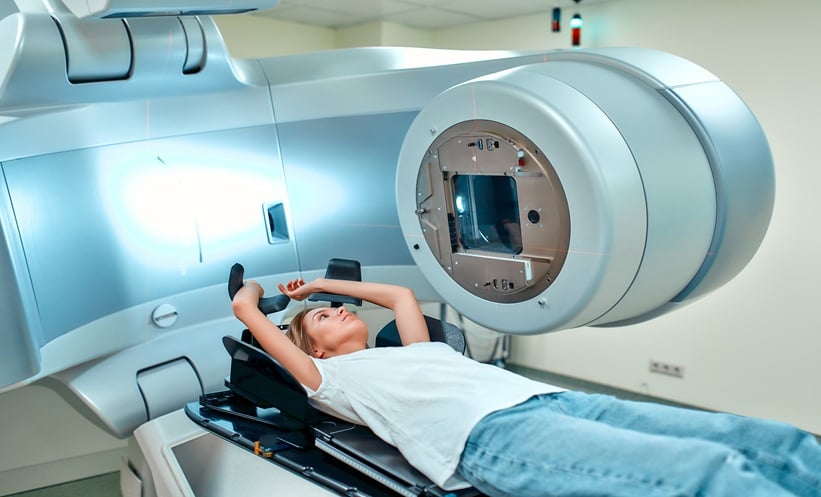
Radiotherapy provided local disease control for patients with unresectable extrahepatic bile duct cancer, but tumour related complications remained a major contributor to mortality, according to a retrospective study.
Radiotherapy Outcomes in Bile Duct Cancer
Researchers assessed outcomes among patients with localised, unresectable or inoperable extrahepatic bile duct cancer treated with conventionally fractionated radiotherapy (RT).
Most patients had perihilar bile duct cancer, and the median radiation dose was 54.0 Gy. Treatment included three-dimensional conformal radiotherapy in 55 patients and intensity modulated radiotherapy in 19. Additionally, 57 patients received concurrent chemotherapy.
Median overall survival was 18.3 months, while median progression free survival was 11.5 months. Estimated freedom from local progression rates were 86.3% at 1 year and 36.2% at 2 years.
Local Complications Contribute to Mortality
Distant metastasis was the most common first pattern of treatment failure, affecting 52.7% of patients, followed by locoregional progression in 20.3%. Despite distant spread being the predominant failure pattern, local complications were also an important concern.
Among the 65 patients who died, cholangitis, liver failure, and tumour bleeding accounted for 26 deaths, representing at least 40.0% of all deaths. The authors noted that the proportion may have been higher because causes of death were unavailable for some patients.
Treatment Toxicity and Future Directions
The study found no cases of acute gastrointestinal toxicity of Grade 3 or higher. However, 8.1% of patients experienced late toxicity of Grade 3 or higher.
Researchers also found that radiation doses above 54 Gy were not significantly associated with freedom from local progression, progression free survival, or overall survival.
Researchers concluded that definitive radiotherapy offered favourable local control with acceptable toxicity in patients with unresectable extrahepatic bile duct cancer. However, the contribution of local complications to mortality supports further efforts to optimise local treatment alongside emerging systemic therapies.
Further work is needed to improve treatment strategies and address both local complications and distant disease progression.
Reference:
Yoo Y.J, Park Jh. Tumor-related local complications as a major contributor to mortality after definitive radiotherapy for unresectable extrahepatic bile duct cancer. Clin Transl Oncol .2026. DOI;10.1007/s12094-026-04581-5.