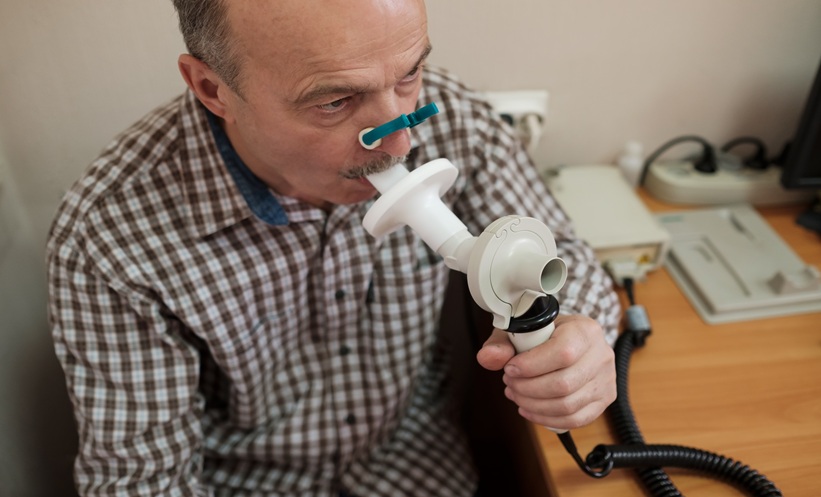
LUNG function was reduced in adults without diabetes or lung disease who had higher glucose levels and impaired insulin sensitivity, according to a cross-sectional study of 2,507 participants aged 50–64 years.
The study included participants from the Umeå site of the Swedish CArdioPulmonary bioImage Study (SCAPIS) who underwent spirometry, diffusing capacity measurement and an oral glucose tolerance test. Individuals with diabetes or lung disease were excluded.
The researchers assessed forced vital capacity (FVC), forced expiratory volume in 1 second (FEV1) and diffusing capacity for carbon monoxide (DLco). They also examined glycated haemoglobin (HbA1c), fasting glucose, 2-hour glucose, fasting insulin, insulin sensitivity, insulin secretion and insulin clearance.
The analysis was adjusted for age, sex, smoking, physical activity, education and waist circumference.
Lung Function was Linked to Glucose and Insulin
Higher 2-hour glucose concentrations were associated with lower FVC and FEV1 (p<0.001 and p=0.003, respectively). HbA1c also showed a nonlinear inverse association with DLco and FEV1, with steeper declines above approximately 37 mmol/mol (5.5%) (p=0.003 and p=0.037, respectively).
Higher fasting insulin was associated with lower FVC and FEV1 (p=0.001 and p=0.027, respectively). Greater insulin sensitivity, measured using the Matsuda index, was associated with higher FVC, DLco and FEV1 (p<0.001, p=0.039 and p=0.001, respectively).
Insulin clearance was positively associated with FVC (p=0.008), while higher insulin secretion was inversely associated with DLco (p=0.009).
Implications for Early Metabolic Risk Assessment
The findings indicated that modest elevations in HbA1c and postprandial glucose, below the current diagnostic threshold for prediabetes, were associated with reduced lung function. Lower insulin sensitivity was consistently associated with lower FVC, FEV1 and DLco.
Reduced insulin clearance was also associated with lower FVC, which the researchers suggested could indicate a potential role for hepatic metabolic dysfunction.
The findings suggest that the lung may be an early target of metabolic disturbances. The researchers concluded that early assessment of metabolic risk may have relevance for preserving pulmonary function among adults without diabetes or established lung disease.
Reference
Otten J et al. Higher glucose levels and impaired insulin sensitivity and clearance are related to reduced lung function in adults without diabetes. Abstract OP223. EASD Congress, 28 September-2 October 2026.